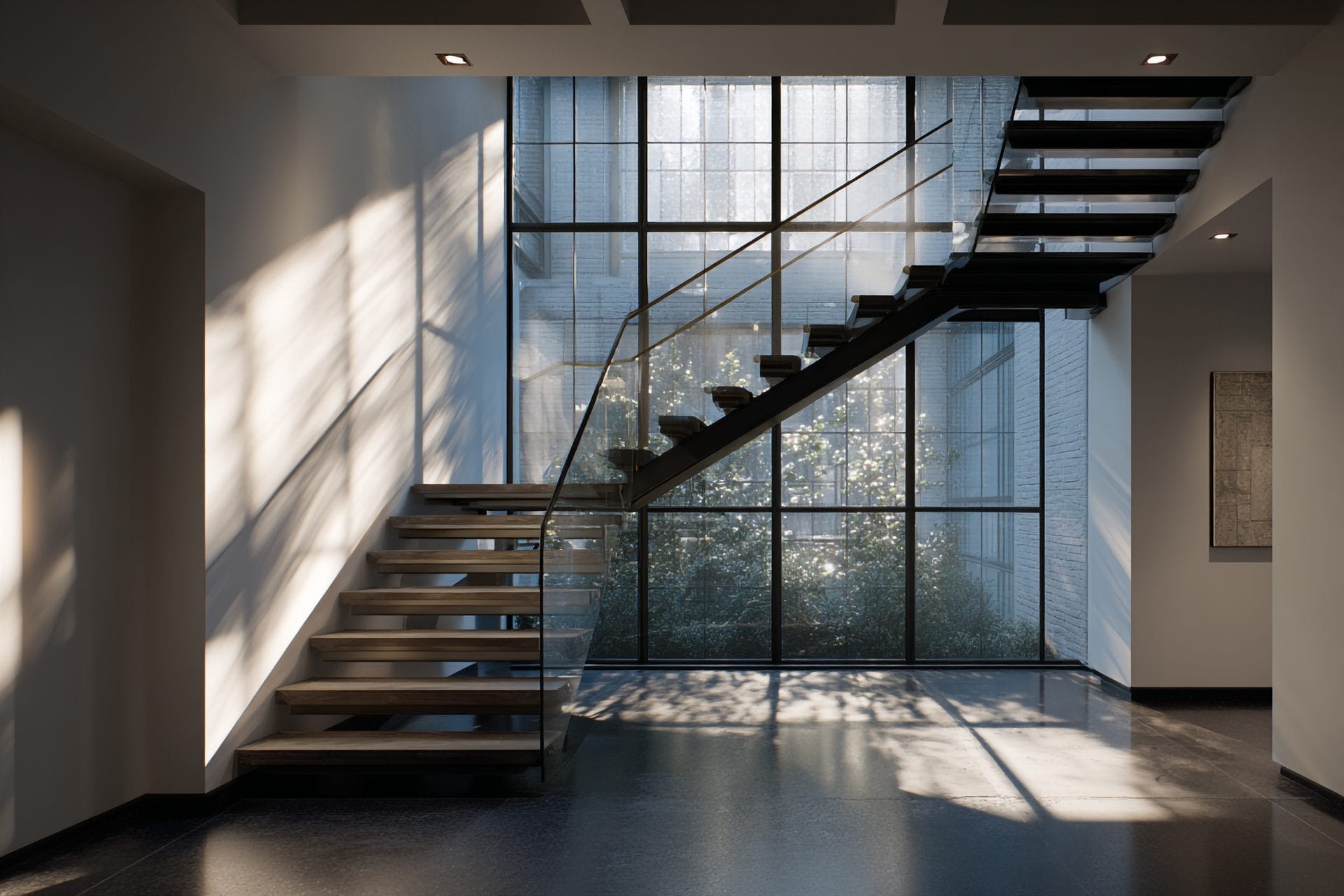
The railing is the most underrated decision in an outdoor renovation. It's the element that defines the view from inside the house — or blocks it entirely. It's the element that determines how your deck photographs for a listing. And it's the element that carries the most significant safety and building code requirements of anything you'll install outdoors. Choosing the right material is a decision worth making carefully — and this guide gives you everything you need to make it right.
Why This Decision Matters More Than You Think
Most homeowners approach the railing decision as a budget item — they know they need something and they default to the cheapest compliant option. This is the wrong framing. The railing is one of the most visible structural elements of your home's exterior. It's seen from the street (on front porches and second-storey decks), it's seen from inside the house (particularly from the main living areas), and it's the element that defines the view from your outdoor space.
In the GTA's current resale market, where outdoor living spaces command premium pricing and buyers increasingly evaluate outdoor areas as carefully as interiors, the railing choice has direct financial implications. A wood railing that needs refinishing will be identified immediately during inspection. A cable railing that has sagged between posts will be a negotiating point. A glass railing that's properly installed, OBC-compliant, and well-maintained adds clean visual value and conveys the same quality signal as frameless shower glass.
Glass Railings: The Premium Standard
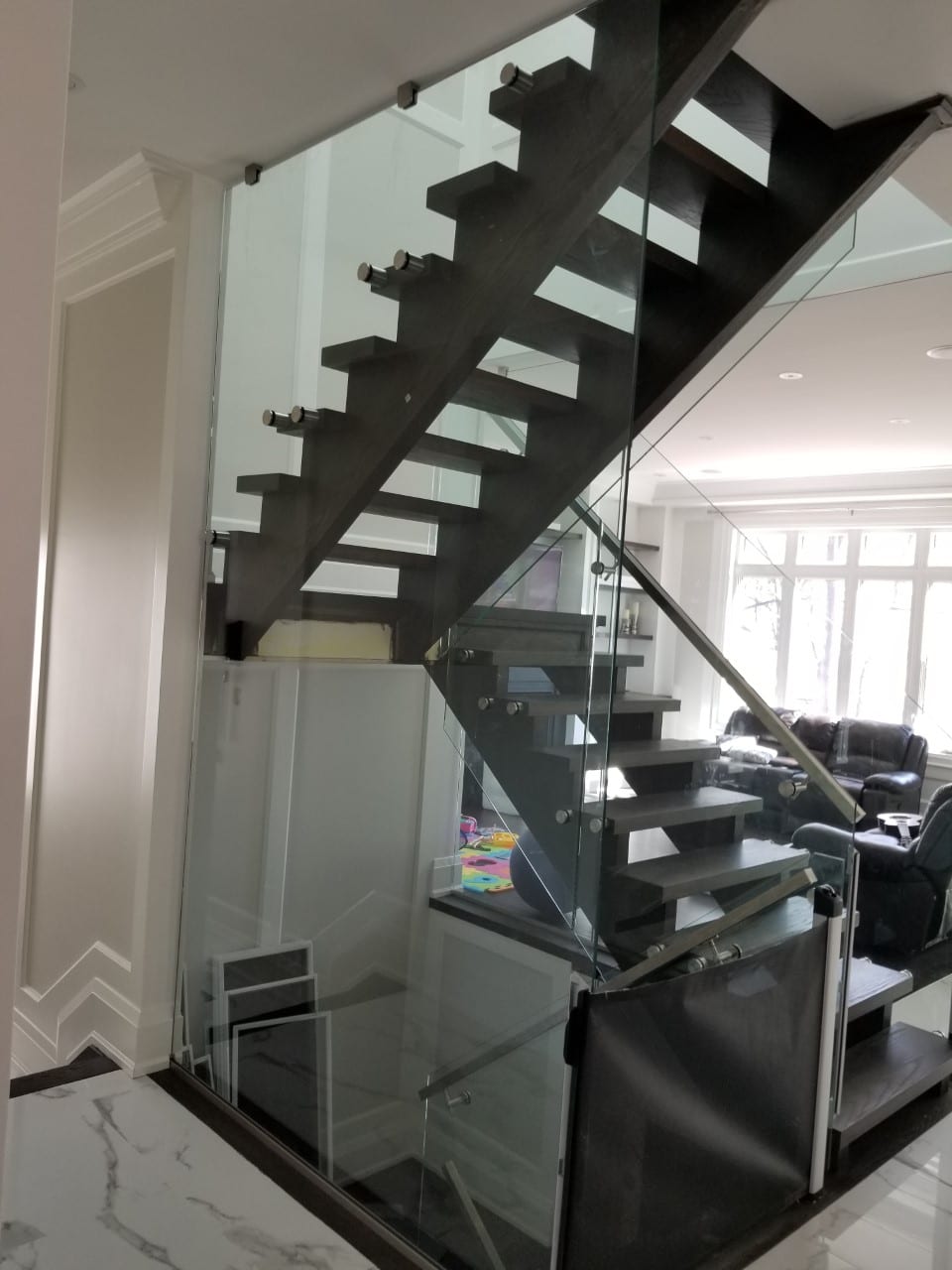
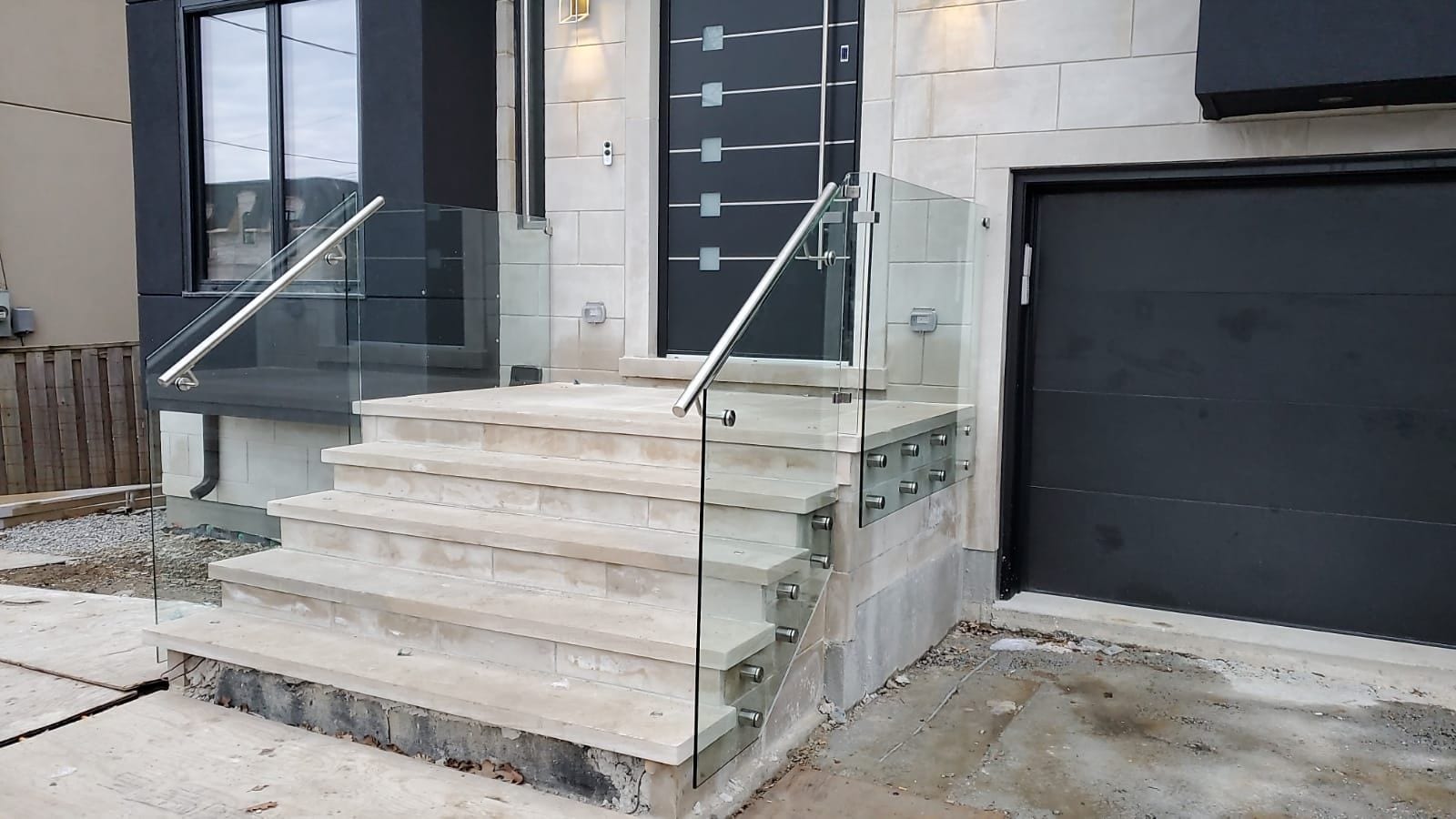
Glass panel railings consist of tempered or laminated tempered glass panels held in a post-and-rail or post-and-channel system. The glass is typically 10mm or 12mm tempered, cut to standard or custom panel dimensions, and mounted in aluminum, stainless steel, or structural post systems. There are two main configuration approaches:
Post-and-panel systems use structural posts at regular intervals (typically every 1.2–1.8m) with the glass panels seated between posts in channels or clamps. This is the most common residential configuration and works well for standard deck perimeters.
Core-drilled or spigot systems fix the glass panels directly to the deck surface via spigots (short post fittings) that fit into the bottom edge of the glass. This creates a truly post-free appearance where the glass appears to rise directly from the deck — an exceptionally clean look, but one that requires precise installation and a very solid deck structure beneath.
The view advantage of glass railings is absolute: you see through them completely. On a deck with a yard view, a water view, or a landscape that took years to cultivate, glass railings let you enjoy that view from both the deck and the interior of the house. No other material offers this.
The maintenance requirement for glass railings is low but real. The glass will accumulate pollen, dust, bird droppings, and mineral deposits from rain. Unlike a shower with daily cleaning habits, outdoor glass is typically cleaned once or twice per season with a mild soap solution and a squeegee or soft cloth. Hardware should be inspected annually and fasteners torque-checked.
Cable Railings: The Industrial Alternative
Cable railings use horizontal stainless steel cables tensioned between vertical posts. The aesthetic is clean, industrial, and contemporary. On decks with dramatic views, horizontal cables — particularly at 3–4 inch spacing — provide much less visual obstruction than a solid baluster system, while still being significantly cheaper than glass.
The complications with cable railings are practical and accumulate over time. First: cables stretch. Even high-tension 316 stainless cables will gradually sag between the tension points, and a cable railing that's not retensioned every 2–3 years will develop visible sag that immediately signals deferred maintenance. Retensioning requires the right tools and familiarity with the tensioner system — it's not complex but it's a recurring cost.
Second: Ontario Building Code (OBC) Part 9, Section 9.8.8 has specific requirements around horizontal baluster spacing. The code requires that a 100mm sphere cannot pass through any opening in the guard. Horizontal cables at the right spacing can meet this requirement, but a child who understands how to use the cables as ladder rungs creates a specific safety concern that building inspectors and insurance companies are increasingly aware of. Some municipalities are now interpreting the climbing-hazard provisions more strictly for horizontal-cable systems.
"Cable railings look great in photos. In person, three years after installation, you're dealing with sag, tension adjustments, and the reality that horizontal cables feel industrial next to a warm natural deck. Glass is more expensive upfront and dramatically less work over ten years."
Built By Glass — Customer Consultation NotesWood Railings: The Classic Choice
Wood railings remain the most common residential railing in Canada, driven primarily by cost and familiarity. A pressure-treated pine or cedar railing system is substantially cheaper to install than glass or high-end cable, and it's a material that almost every contractor is comfortable working with.
The honest picture of wood railing maintenance in the GTA climate — four distinct seasons, with wet springs, hot humid summers, and freeze-thaw winters — is demanding. Untreated wood expands, contracts, cracks, warps, and ultimately rots. Painted wood requires repainting every 3–5 years. Stained cedar requires restaining every 2–3 years. Pressure-treated pine greys quickly without stain and doesn't hold paint as well as natural wood. Every one of these maintenance cycles involves sanding, prep work, and application time — or a contractor cost.
Beyond maintenance, wood railings have balusters — vertical members at code-required spacing — that visually break up the view through the railing. In a deck with a meaningful view, this is a significant compromise. In a low-level deck facing a fence, it matters less.
Considering a glass railing for your deck or balcony?
Built By Glass installs OBC-compliant glass railings across the GTA using marine-grade 316 stainless hardware. Free consultation, 5-year warranty.
Aluminum: The Fourth Option Worth Mentioning
Aluminum picket and panel railing systems — powder-coated, maintenance-free, and widely available — occupy an interesting market position. They're cheaper than glass, more durable than wood, and require virtually no maintenance beyond occasional washing. Aluminum powder coating doesn't rust, fade, or require repainting.
The limitation: aluminum railings read as builder-grade. The powder-coated finish, extruded post profiles, and standard balusters signal a cost-constrained decision. For a $500,000 townhome, aluminum is a perfectly reasonable choice. For a $900,000 house with a premium outdoor living space that needs to photograph well and impress during showings, aluminum railings are a mismatch with the price tier.
Full Material Comparison
| Factor | Glass | Cable | Wood | Aluminum |
|---|---|---|---|---|
| Installed cost (GTA, per linear ft) | $220–$260 (min. $1,400) | $120–$280 | $60–$150 | $80–$180 |
| View preservation | ✓✓ Complete | ✓ Very good | ✗ Blocked | ✗ Blocked |
| Annual maintenance | Low | Medium (retension) | High (refinish) | Very low |
| Lifespan (maintained) | 25–40+ years | 15–25 years | 10–20 years | 20–30 years |
| OBC compliance (typical) | ✓ Easy | △ Climbing risk review | ✓ Standard | ✓ Standard |
| Resale signal ($700K+ home) | Premium | Contemporary | Neutral/negative | Builder-grade |
| Fire resistance | ✓ Excellent | ✓ Excellent | ✗ Burns | ✓ Good |
| Photography/listing appeal | Exceptional | Good | Neutral | Average |
OBC Compliance: What Every Railing Must Meet
Regardless of material, all residential guards (railings on elevated platforms — decks, balconies, stairs) in Ontario must comply with Ontario Building Code (OBC) Part 9, Section 9.8.8. The key requirements:
- Height: A guard is required wherever the deck surface is more than 600mm above grade. The minimum height is 900mm (35 inches) for decks up to 1,800mm above grade, and 1,070mm (42 inches) where the deck surface is more than 1,800mm above grade.
- Load resistance: Residential guards must resist a horizontal load of 0.5 kN/m distributed along the top rail, or a 1.0 kN concentrated load applied at any point — whichever governs.
- Infill spacing: No opening in the guard can allow passage of a 100mm sphere — this governs baluster spacing, cable spacing, and glass panel sizing.
- No horizontal rails within 140mm to 900mm from the deck surface — to prevent the guard from serving as a climbing ladder for children.
- Top rail continuity: The top rail must provide a continuous graspable surface — some glass railing designs that eliminate the top rail require engineer review to confirm compliance.
Some glass railing systems eliminate the top rail entirely — the glass panels simply terminate at the height requirement with only a polished or ground edge at the top. These systems look exceptional but require engineering review and specific glass specifications (typically laminated tempered) to meet OBC load requirements without the structural contribution of a top rail. Built By Glass can advise on when this approach is appropriate.
Making the Right Call for Your Home
The decision framework depends primarily on three factors: home price tier, view value, and maintenance appetite.
High view value + home above $750K: Glass railings. The view is an asset; the railing should protect it, not block it. The resale premium is real and documented.
Contemporary style + moderate budget: Cable railings — but budget for retensioning every 2–3 years and ensure the specific configuration passes the local inspector's climbing-hazard review.
Traditional home, low-level deck, budget priority: Treated wood or aluminum. Both are code-compliant, durable enough, and appropriate for their context.
Multi-story home with significant outdoor entertaining: Glass. The safety benefits (no climbing hazard, fire resistance, no rot), the aesthetic benefits, and the listing appeal all converge at this property tier.
Whatever material you choose, invest in quality installation. A glass railing installed with 316 stainless hardware at correct OBC heights is a 30-year investment. A glass railing installed with inadequate hardware in non-compliant heights is a liability. The material only performs as well as the installation behind it.
Frequently Asked Questions
Both meet Ontario Building Code Section 9.8.8 requirements when properly designed and installed. The structural code calculation is the same. The difference is in failure mode: tempered glass railings, if broken, shatter into small dull granules contained within the structural framing. Cable railings stay intact under failure but allow climbing by small children (which is why cable spacing requirements are tight — typically 4 inch maximum). For households with young children, glass is generally considered the safer choice because it removes the horizontal climbing risk.
Glass shows fingerprints and water spots between cleanings, but the cleaning itself is simple — outdoor glass typically needs a wipe-down only once or twice per season. Cable railings hide grime better visually, but the cables stretch and need terminal inspection and retensioning every 2–3 years — mechanical upkeep glass never requires. Over a full ownership window, glass carries the lower lifetime maintenance; cable trades visible cleaning for periodic hardware work.
Glass railings, by a margin, when both are installed with quality marine-grade hardware. Tempered glass is essentially inert — it does not corrode, fade, weaken with UV exposure, or require periodic re-tensioning. A properly installed glass railing's hardware (316 stainless for lakefront exposure, 304 elsewhere) is the maintenance item. Cable railings require periodic re-tensioning (cables stretch over time, especially the first 6–12 months), and cable terminals are corrosion-prone in marine environments. Over a 20-year service window, glass railings have lower lifetime maintenance than cable for GTA conditions.
For systems, mounting options, and per-linear-foot pricing, see our glass railing installation page.
Ready for a glass railing that performs?
Built By Glass installs OBC-compliant glass railing systems across the GTA using marine-grade hardware. Free consultation, in-house installation, 5-year warranty — Founder-Led Standard.
Prefer to talk it through? Call 647-778-0430.