Every few years, a material gets a genuine cultural moment — not just in Instagram saves but in actual purchase decisions. Glass is in the middle of one right now. After a decade of homeowners treating glass as a functional afterthought, 2026 is seeing a sharp correction: glass is being chosen for aesthetic reason first, and functional reason second. If you're renovating or building in the GTA this year, this guide tells you exactly what's trending, why, and — more importantly — how to execute each trend without it looking dated in three years.
The Shift That's Happening
There's a useful way to understand what's driving glass trends right now: people are exhausted by white. After the all-white, everything-bright, Scandinavian-minimalist wave of the 2010s and early 2020s, renovation clients are gravitating toward materials that have depth, character, and a sense of deliberateness. Glass — which can be tinted, textured, smoked, fluted, or treated with nano-etching to create opacity — turns out to be one of the most versatile surfaces in a home for answering this desire. It can be bold or invisible, warm or cool, solid or airy, depending entirely on how you specify it.
The second driver is what we'd call the "luxury signal" shift. In the GTA's $800K–$2M home market, buyers have become sophisticated enough to identify quality glass installations on sight. A frameless shower with thick glass and warm hardware now reads clearly as premium. Framed, lightweight, or poorly fitted glass reads as the opposite. This is creating genuine demand pull — people want the upgrade because they can see the difference.
Trend 1: Smoked & Tinted Glass — The New Clear
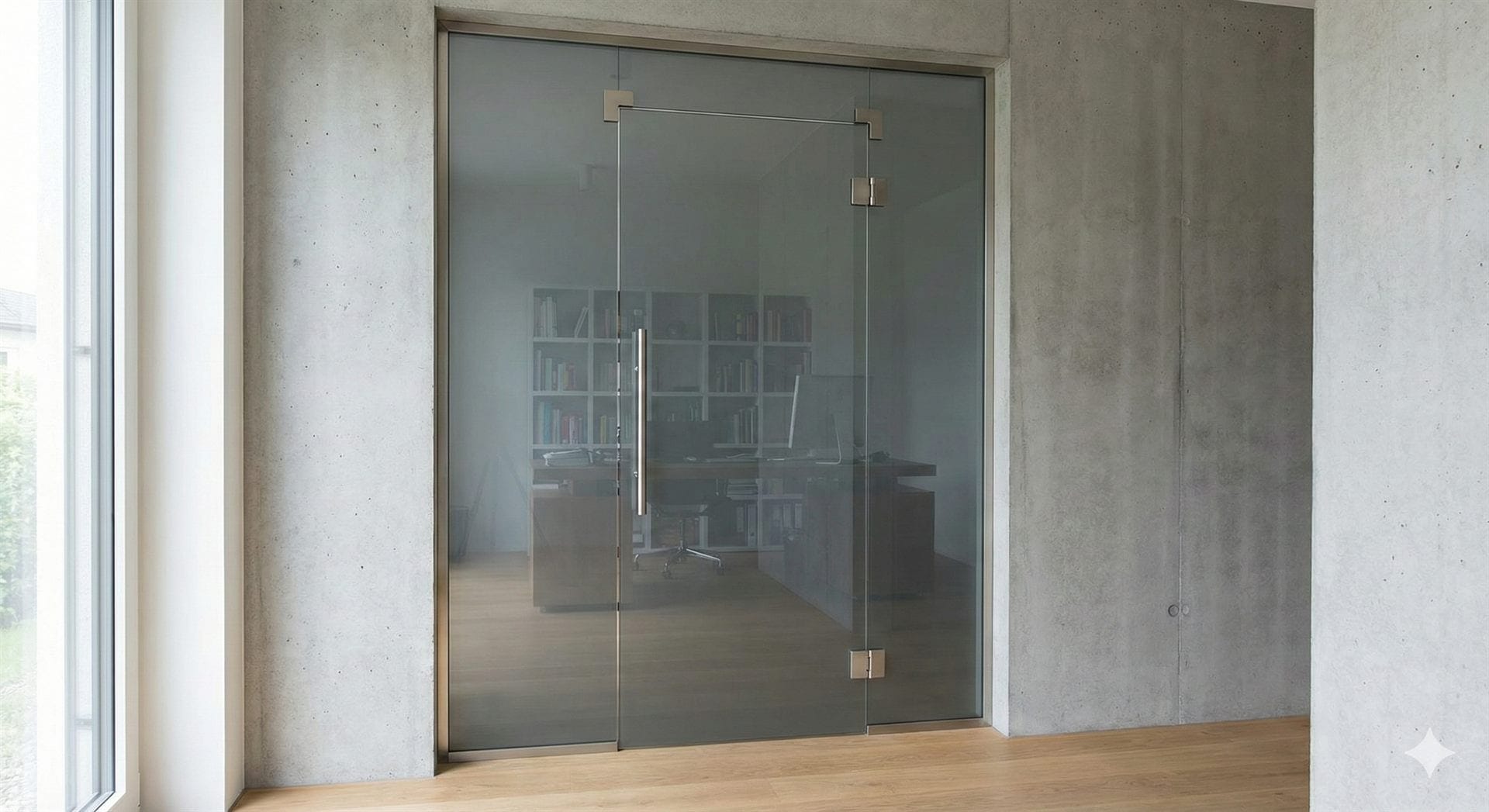
Tinted Glass: Grey, Bronze & Charcoal
Smoked glass adds depth and privacy without sacrificing the open feel that makes frameless glass so desirable. In showers, a light grey or charcoal tint is particularly effective: it conceals soap residue and water marks more forgivingly than crystal-clear glass, and it photographs dramatically well in real estate listings.
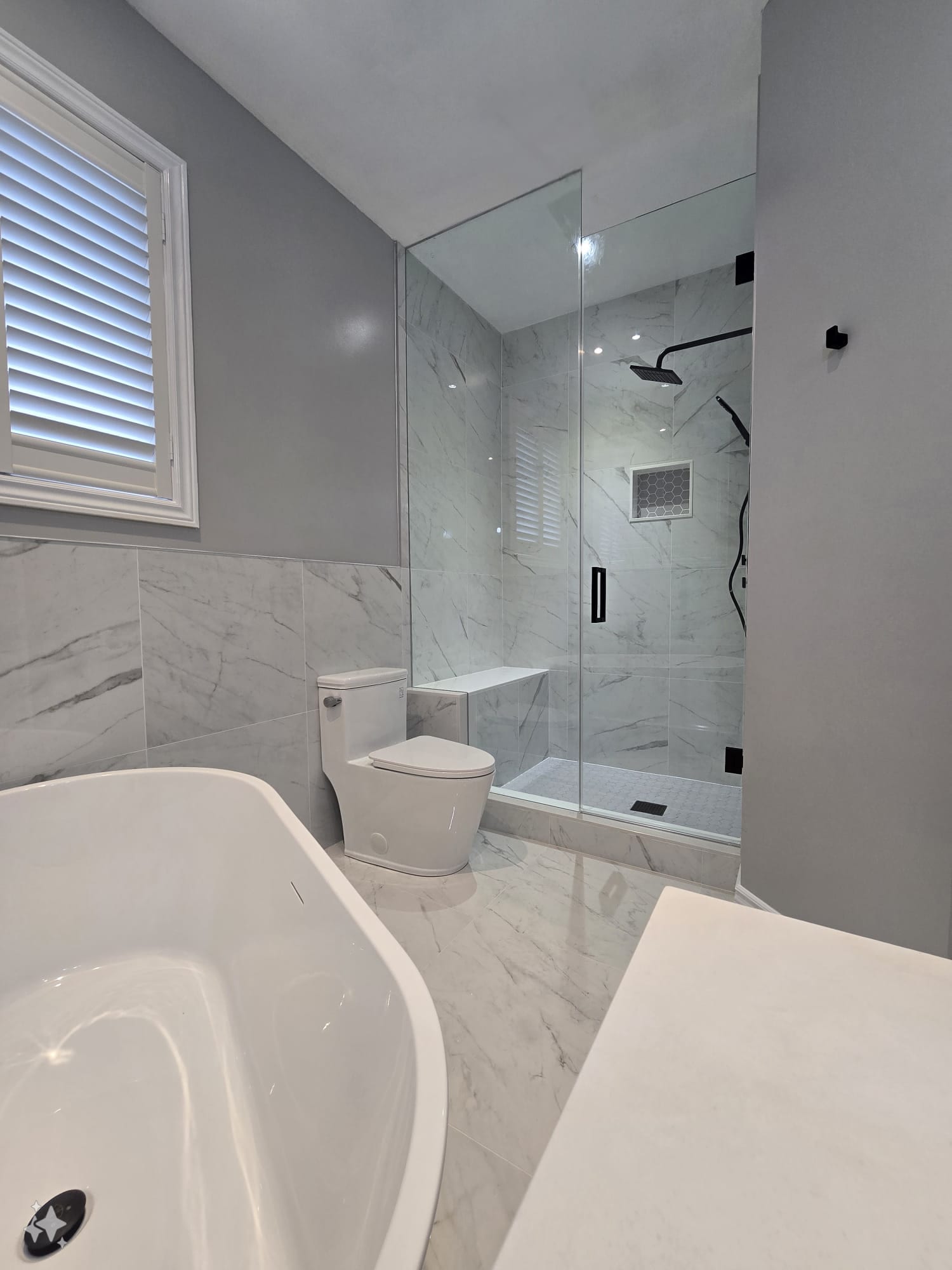
The key specification decision is tint density. A 10% grey tint is subtle — you'll notice it mainly at the edge. A 40–50% tint creates genuine visual privacy. Bronze tints skew warmer and pair naturally with gold or champagne hardware. Charcoal/dark grey reads as dramatically contemporary and pairs best with matte black hardware and dark tile.
One thing to watch: very dark tints in small showers can make the space feel cave-like rather than dramatic. In bathrooms under 6×6 feet, stay below 30% tint density and compensate with strong lighting. In larger walk-ins and open-concept spaces, go darker without reservation.
Where it works best: Master bath frameless showers, glass office partitions, wine cellar enclosures, spa-style wet rooms.
Trend 2: Fluted Glass Moves Beyond Cabinets
Reeded & Fluted Glass Textures
Fluted glass — sometimes called reeded or ribbed glass — has a vertical corrugated texture that diffuses light while providing visual privacy. It's been a fixture in vintage and Art Deco buildings for decades, and its current revival tracks closely with the broader return-to-craft aesthetic.
In shower enclosures, fluted glass solves a common problem: homeowners who want the openness of a glass shower but not the full transparency. Frosted glass can feel clinical. Fluted glass has warmth and texture — it catches light in interesting ways throughout the day and has an artisan quality that pure clear glass doesn't.
A practical note: fluted glass is harder to keep clean than smooth glass because the ribbed texture traps soap scum in the grooves. It's best used for fixed panels (the three stationary sides of an enclosure) rather than the door, which should remain smooth for easier cleaning and better squeegee performance.
Where it works best: Shower fixed panels, interior room dividers, bathroom windows, front door sidelights where privacy matters.
Trend 3: Frameless Everything — The Frame Is Now the Signal
Frameless Has Become the Luxury Signal
When a railing or shower enclosure has a visible aluminum frame, it communicates cost-consciousness. When the glass appears to float — held by minimal hardware — it communicates investment and care. This is no longer a subtle distinction. Buyers in the GTA's premium home market have been conditioned to read it clearly.
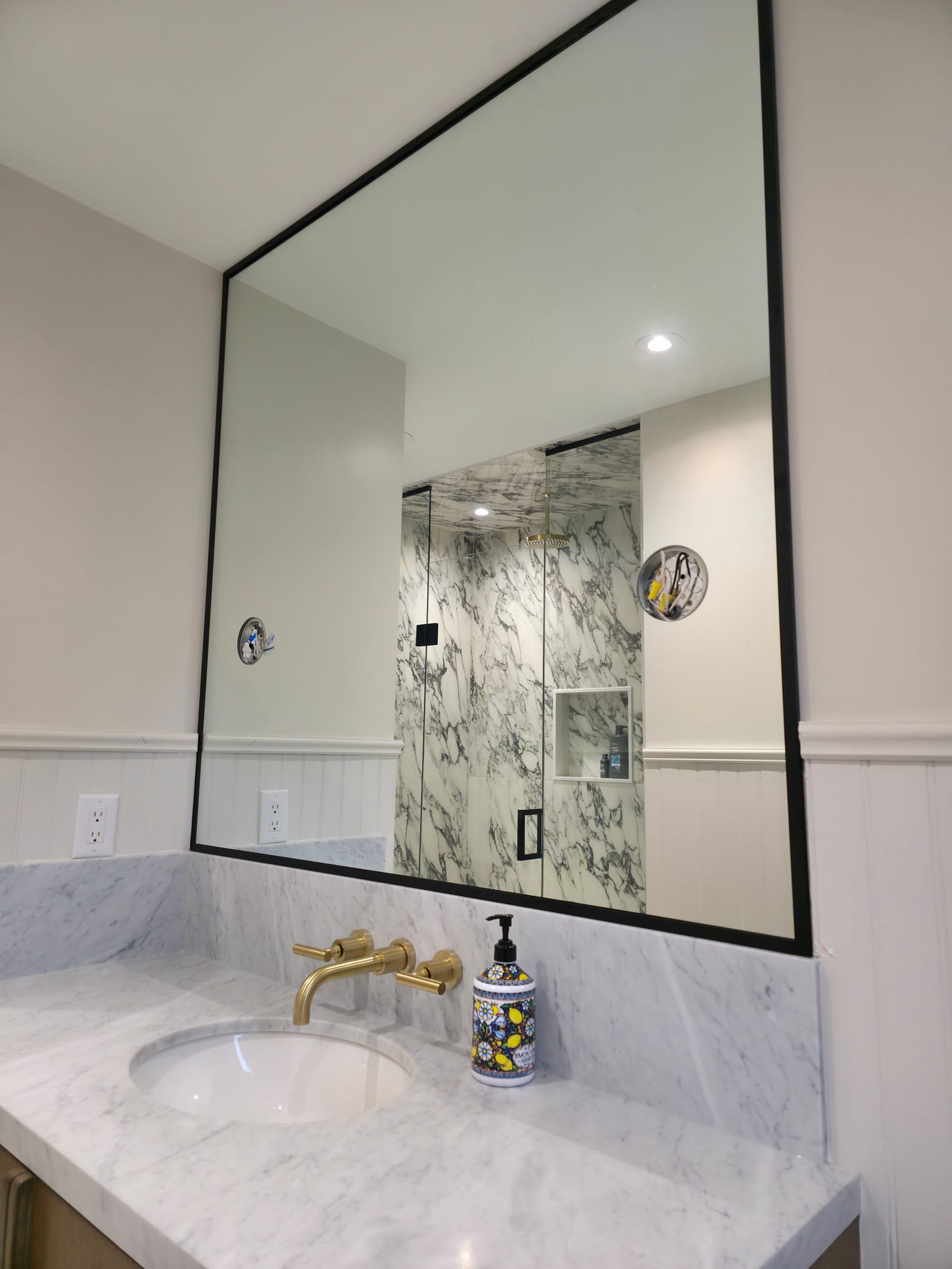
The interesting aspect of this trend is that it's expanding beyond traditional glass applications. Frameless mirrors — where the glass extends to the edge with no visible frame — are now standard in high-end master baths. Interior glass partitions in open-plan homes are being installed with minimal channel systems rather than framed grid systems. Glass railings are increasingly specified with no top rail at all, just standoff posts and clamps.
The design principle: when less hardware is visible, more of the space's architecture is visible. A frameless glass balcony railing disappears — you see the view, not the railing. That's a premium experience that clients will pay for.
"When the glass appears to float — held by the minimum possible hardware — it communicates investment. That's the whole point of frameless."
Built By Glass — Design Consultation Notes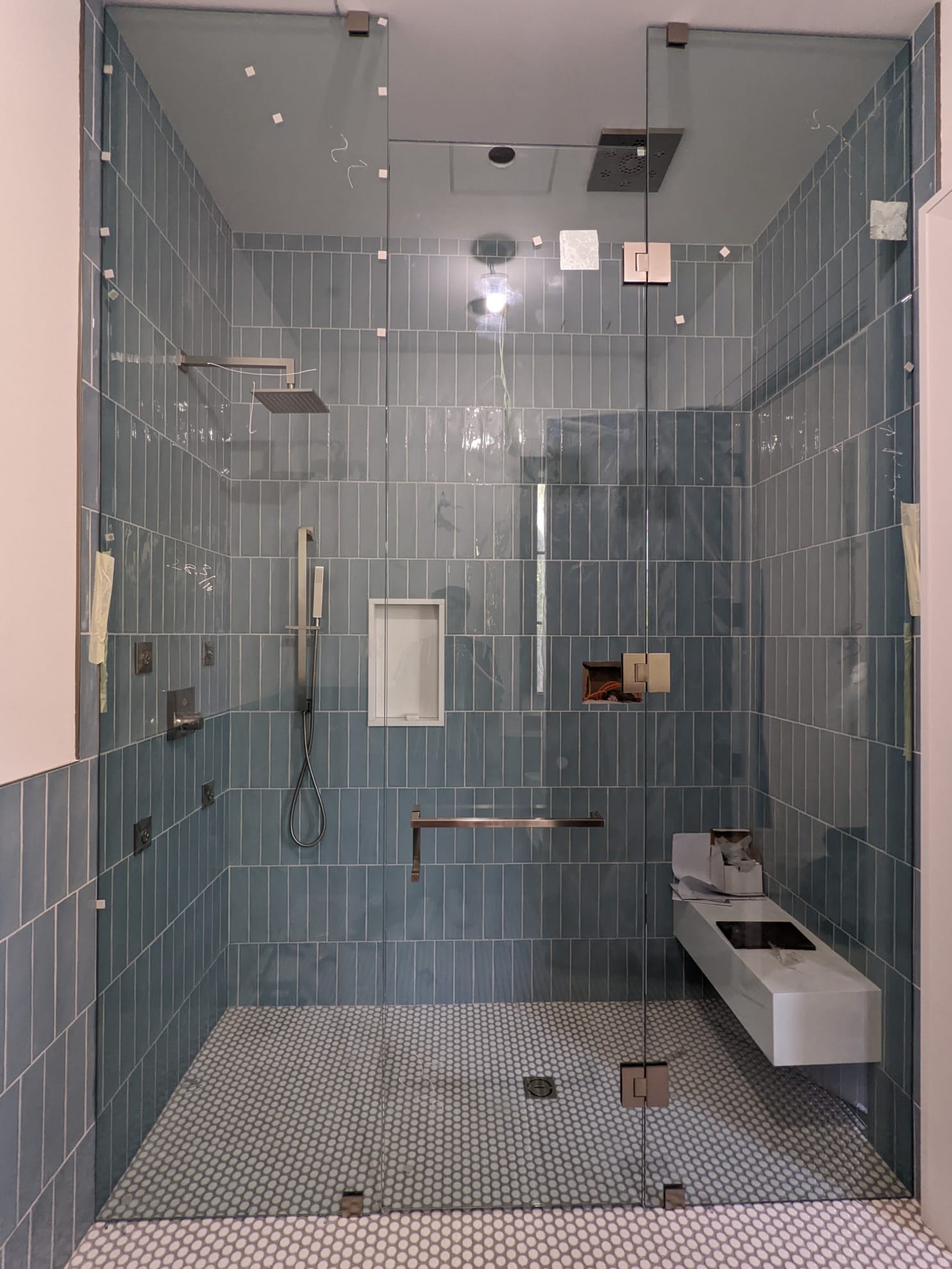
Trend 4: Warm Hardware Finishes — Champagne Bronze Is Here
Warm Metals Replace Matte Black
Matte black had its moment — and it was a good one. But in 2025–2026, the palette is warming. Champagne bronze has a dusty, antique-gold quality that feels simultaneously luxurious and understated. It pairs naturally with warm-toned tile (terracotta, warm white, sand), wood vanities, and organic material palettes.
The practical advantage of warm finishes over polished finishes is maintenance: champagne bronze and satin brass hide fingerprints and water spots far better than polished chrome or polished gold. The texture of a brushed or satin finish diffuses light rather than reflecting it sharply, which means imperfections are much less visible day-to-day.
Hardware finish also interacts with glass colour in ways that matter. Clear low-iron glass with champagne bronze hardware has a warm, natural quality. Standard clear glass with the same hardware picks up the green edge tint and can look slightly off. If you're committing to warm hardware, consider pairing it with low-iron or lightly tinted glass to eliminate that green cast at the edges.
Pairing guide: Champagne bronze + warm white tile + wood vanity. Matte black + dark tile + matte surfaces. Brushed nickel + grey tile + contemporary palette. Polished chrome + pure white + minimalist spaces.
Bring the 2026 look to your home
Built By Glass offers smoked glass, low-iron ultra-clear, and every hardware finish trending right now. Book a no-obligation consultation in the GTA.
Trend 5: Privacy Glass — Function Meets Discretion
Privacy Glass Goes Residential
The desire for open, glass-forward spaces runs directly into the desire for privacy. Privacy glass solves this tension. The most sophisticated option is switchable/smart glass (PDLC film), which switches from opaque to transparent on demand. More affordable options include acid-etched frosted glass and sandblasted panels.
In residential renovations, privacy glass is appearing in: home office glass walls (visible from open-plan living areas), bedroom-to-ensuite glass partitions, street-facing bathroom windows, and even glass garage doors in visible-from-the-street situations. The common thread is the desire for daylight without visibility from the outside.
Trend 6: Outdoor-Indoor Glass — The Seamless Transition
Indoor-Outdoor Glass Systems
As GTA homes in the $1M+ range increasingly treat their outdoor spaces as an extension of the main living area, glass plays a central role. Glass panel railings on decks and balconies preserve views while meeting OBC load requirements. Full-height glass doors and retractable glass wall systems are the pinnacle — and they're increasingly specified in new builds and major renovations.
The performance considerations for outdoor glass are significant. All exterior glass requires marine-grade (316) stainless steel hardware for corrosion resistance. Glass exposed to weather should be tempered or laminated tempered. Any hardware penetrations (through the glass for post systems) require precisely placed pre-drilled holes in the raw glass before tempering.
What's Quietly Fading in 2026
Knowing what's trending is only half the picture. Here's what to avoid if you're renovating now and don't want to look dated at resale in 3–5 years:
| Fading Element | Why It's Declining | What to Do Instead |
|---|---|---|
| Framed shower enclosures | Reads as budget-tier; hard to clean around frame | Frameless or semi-frameless |
| Polished chrome hardware | Over-associated with builder-grade and dated bathrooms | Brushed nickel, champagne bronze, or matte black |
| Sliding barn-style shower doors | Peaked 2018–2021; feels dated and trendy | Hinged pivot or frameless inline panels |
| Round frameless mirrors | Over-saturated in 2021–2023 renovations | Rectangular custom frameless or arched top |
| Heavy ornate mirror frames | Conflicts with contemporary and transitional palettes | Thin frame or custom frameless with beveled edge |
How to Use These Trends Right in Your Home
The design failure mode for trends is chasing all of them at once. A bathroom that has smoked glass, fluted panels, champagne bronze hardware, and privacy-switchable glass is likely to feel incoherent rather than luxurious. The better approach: pick one or two trends as the focal point, and execute them with precision and quality materials.
The frameless-and-warm-hardware combination is the most universally applicable pairing right now. It works across contemporary, transitional, and organic-modern design aesthetics. If you add a second element — a tinted glass for depth, or a fluted fixed panel for texture — choose only one and make it deliberate.
Whatever you specify, prioritize quality of execution over trend specificity. A perfectly installed clear frameless shower in excellent hardware will look better in 10 years than a trend-chasing installation that was poorly fitted or used inferior materials. The trends are a guide; the quality is the constant.
The GTA market specifically rewards bathrooms that feel intentional and curated over those that feel busy or dated. When in doubt, do less with better materials. A single thick glass panel in a well-chosen tint, held by excellent hardware, is more impressive than six competing design moves.
Frequently Asked Questions
Four trends dominate 2026 renovations across the GTA: smoked and tinted glass in grey and bronze, fluted and reeded texture panels, warm hardware finishes like champagne bronze and brushed brass, and frameless designs in every application — showers, railings, and partitions. The common thread is glass treated as a designed feature rather than an invisible utility.
Framed aluminum shower doors read as dated in current GTA renovations, and heavy ornate hardware is fading with them. Frameless and semi-frameless enclosures dominate new installs. A well-maintained framed unit doesn't need replacing on style grounds alone — but if you're renovating with resale in mind, frameless is what buyers photograph.
Brushed nickel and champagne bronze are the safest long-horizon choices. Matte black is the most requested contemporary finish and still climbing, while polished chrome increasingly reads as builder-grade and dated. Built By Glass stocks 13 standard finishes across CRL, Richelieu, FMF, and Obsidian hardware lines, so you can match the fixtures you already own.
Yes, with one caveat: texture adds surface area, so a regular squeegee habit matters more than it does with smooth panels. Fluted glass is most popular on shower entry panels, interior partitions, and cabinet inserts, where it adds privacy and depth without blocking light. For heavy-use family showers, many clients keep the texture on the fixed panel and choose smooth glass for the door.
To bring any of these trends home, see our LED-backlit custom mirrors and frameless glass showers pages.
Ready to design your 2026 glass space?
Built By Glass stocks smoked glass, low-iron ultra-clear, and all trending hardware finishes. Free consultation, accurate quotes, Founder-Led Standard — serving Pickering, Toronto, Vaughan, Mississauga, and across the GTA.
Prefer to talk it through? Call 647-778-0430.