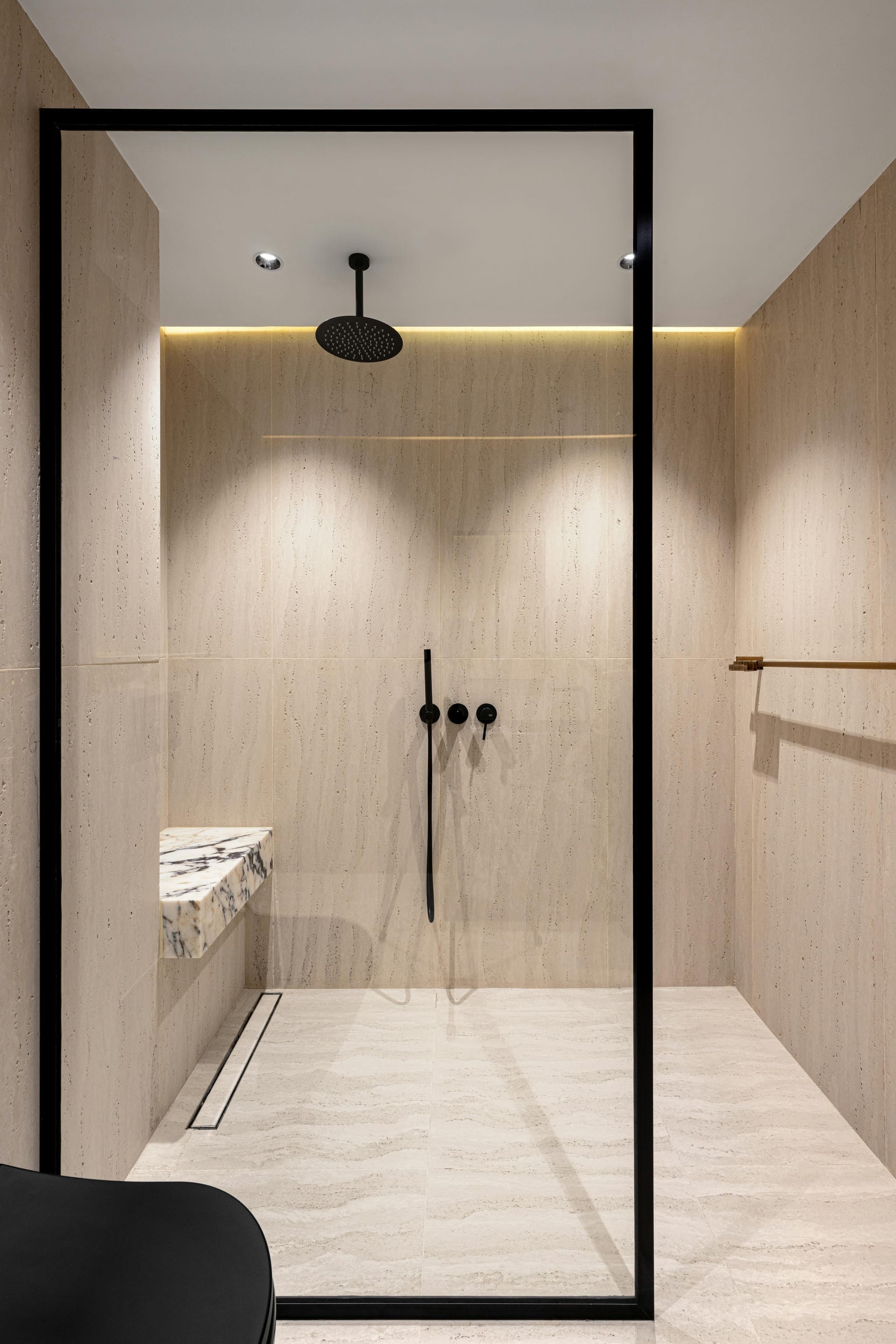
When people say they want a frameless shower, they don't always mean the same thing. The term gets applied to everything from true fully-frameless custom installations to enclosures that have a visible aluminum header at the top and full silicone seal at all four corners. Understanding the actual difference — in construction, cost, maintenance, and long-term performance — helps you ask the right questions and spend your renovation budget in the right place.
Why This Choice Actually Matters
The shower enclosure is the single most visual element in a bathroom renovation. It's the first thing buyers notice, the last thing they look at on a walkthrough, and the element that most clearly communicates budget tier. Getting this decision right — not just picking what looks good online but understanding what you're actually committing to in terms of cost, maintenance, and long-term satisfaction — is worth the 15 minutes this article takes to read.
Beyond aesthetics, the type of enclosure affects: how easy it is to clean, how long it will look new, how the glass relates to the tile and hardware, and what happens at resale. Each type has a genuine use case. The goal isn't to talk you into frameless — it's to help you choose correctly for your situation.
Framed Shower Enclosures: The Full Picture
Full Aluminum Frame
- + Lowest upfront cost
- + Widely available
- + Accommodates minor wall irregularities
- − Frame traps soap scum and mould
- − Dated aesthetic in most contexts
- − Thinner (5–6mm) glass required
- − Negative impact on resale signal
Partial Frame + Open Door
- + Better aesthetic than full-framed
- + More affordable than fully frameless
- + Works well in standard alcove showers
- − Frame still present on three sides
- − Still requires frame cleaning
- − Less resale impact than frameless
Hardware Only — No Frame
- + Maximum visual impact
- + Easiest to clean long-term
- + Works with any tile/design
- + Strongest resale signal
- − Highest upfront cost
- − Requires precise, square walls
A framed shower enclosure uses an extruded aluminum channel on all four sides — top, bottom, and both verticals — to hold the glass panels in place. Because the frame provides structural support on all edges, the glass itself doesn't need to carry structural loads. This is why framed enclosures use thinner glass (typically 5–6mm) and why they can be installed in a wider range of wall conditions.
The problem with framing is practical and aesthetic. The frame provides an ideal environment for soap scum, calcium deposits, and mould to accumulate in the corners and joints. Every frame corner has a crevice. Every crevice is impossible to squeegee and difficult to clean. Over 2–3 years of use, a framed shower enclosure that isn't cleaned with a brush and cleaner at every joint, every week, will show visible mould at the frame edges and grout lines — especially in humid, poorly ventilated bathrooms. This is the daily-use reality that doesn't show up in product photos.
Semi-Frameless: The Middle Ground (and Its Limits)
Semi-frameless enclosures typically have a fixed aluminum frame on the two stationary sides and top, with a frameless hinged door. The door appears to float — it opens and closes without a visible frame — while the surrounding panels are held in aluminum channels. In an alcove shower (three tile walls, one glass wall), a semi-frameless configuration means the side returns are in channels, and the door is frameless.
This is a genuine improvement over full-framed: the door, which is the piece people interact with most and look at most directly, has the clean frameless appearance. The fixed panels are tucked in channels that are less visible and less trafficked. Cleaning the door is as easy as a fully frameless panel.
Where semi-frameless falls short: the frame is still present, and the junction between frame and tile is still a cleaning challenge. For a bathroom renovation where the goal is maximum visual impact and minimum maintenance over time, semi-frameless is a compromise. It's the right choice when budget doesn't allow fully frameless and the project is a secondary bathroom or a home where resale isn't the primary concern.
Frameless: Why the Premium Exists
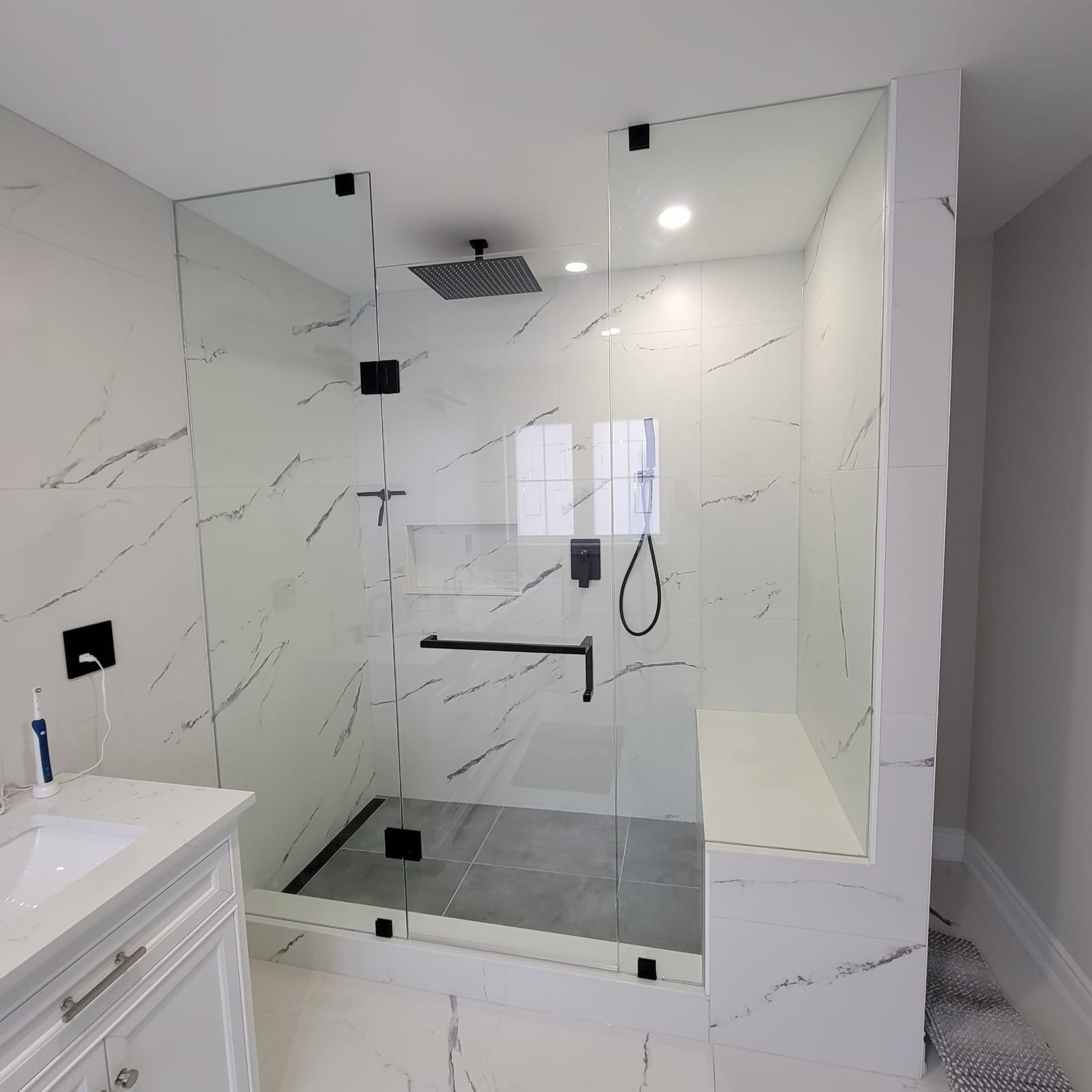
A true frameless shower enclosure holds glass panels using only hardware — hinges, clamps, standoff bolts, U-channels at the floor — with no visible aluminum frame anywhere on the glass itself. The glass is thick enough (10mm or 12mm) to be the structural element. Panels are custom-sized to the exact dimensions of the space. The result is uninterrupted glass surface from wall to wall, floor to ceiling if designed that way, with hardware as the only visible non-glass element.
The cleaning advantage of this configuration is significant and often underestimated. With no frame, there are no frame corners to harbour mould. There's glass — easy to squeegee — and hardware — easy to wipe. The silicone seal at the glass-to-tile junction is at the perimeter, where it can be reached and cleaned, not buried in a frame channel. A well-maintained frameless shower with a daily squeegee habit looks essentially the same after five years as it did on day one.
The aesthetic advantage is just as real: frameless glass in a bathroom reads as intentional, premium, and timeless. It doesn't date the way a particular tile pattern might. It doesn't compete with the hardware finishes or the vanity. It disappears — which is exactly the point. You see the bathroom. You see the tile. You see the space. You don't see the enclosure.
"True frameless glass doesn't just look better — it's objectively easier to maintain over time. The absence of the frame is both the premium aesthetic and the practical advantage, at the same time."
Built By Glass — Design Consultation PhilosophyThe Side-by-Side Comparison
| Characteristic | Framed | Semi-Frameless | Frameless |
|---|---|---|---|
| Upfront cost (GTA) | Market typical $1,200–$3,500 | Use estimator for a range | $1,170–$4,500+ ($40–$60/sqft) |
| Glass thickness | 5–6mm | 6–8mm (fixed) / 10mm (door) | 10–12mm throughout |
| Weekly cleaning time | High (frame scrubbing) | Medium | Low (squeegee only) |
| Mould risk at 3 years | High | Moderate | Low |
| Resale impact (GTA $700K+) | Negative/neutral | Slightly positive | Strongly positive |
| Wall squareness required | Tolerant (frame hides gaps) | Moderately tolerant | Precise (frame doesn't hide) |
| Hardware grade (typical) | Extruded aluminum | Mixed | Solid brass or 316 SS |
| Custom sizing | Sometimes (limited ranges) | Usually | Always — custom only |
| Long-term durability | Frame corrodes/degrades | Mixed — frame elements degrade | Hardware outlasts everything |
Not sure which type is right for your bathroom?
Built By Glass does frameless and semi-frameless installations across the GTA. Free consultation — we'll give you an honest recommendation based on your space and budget.
The "Cheap Frameless" Problem
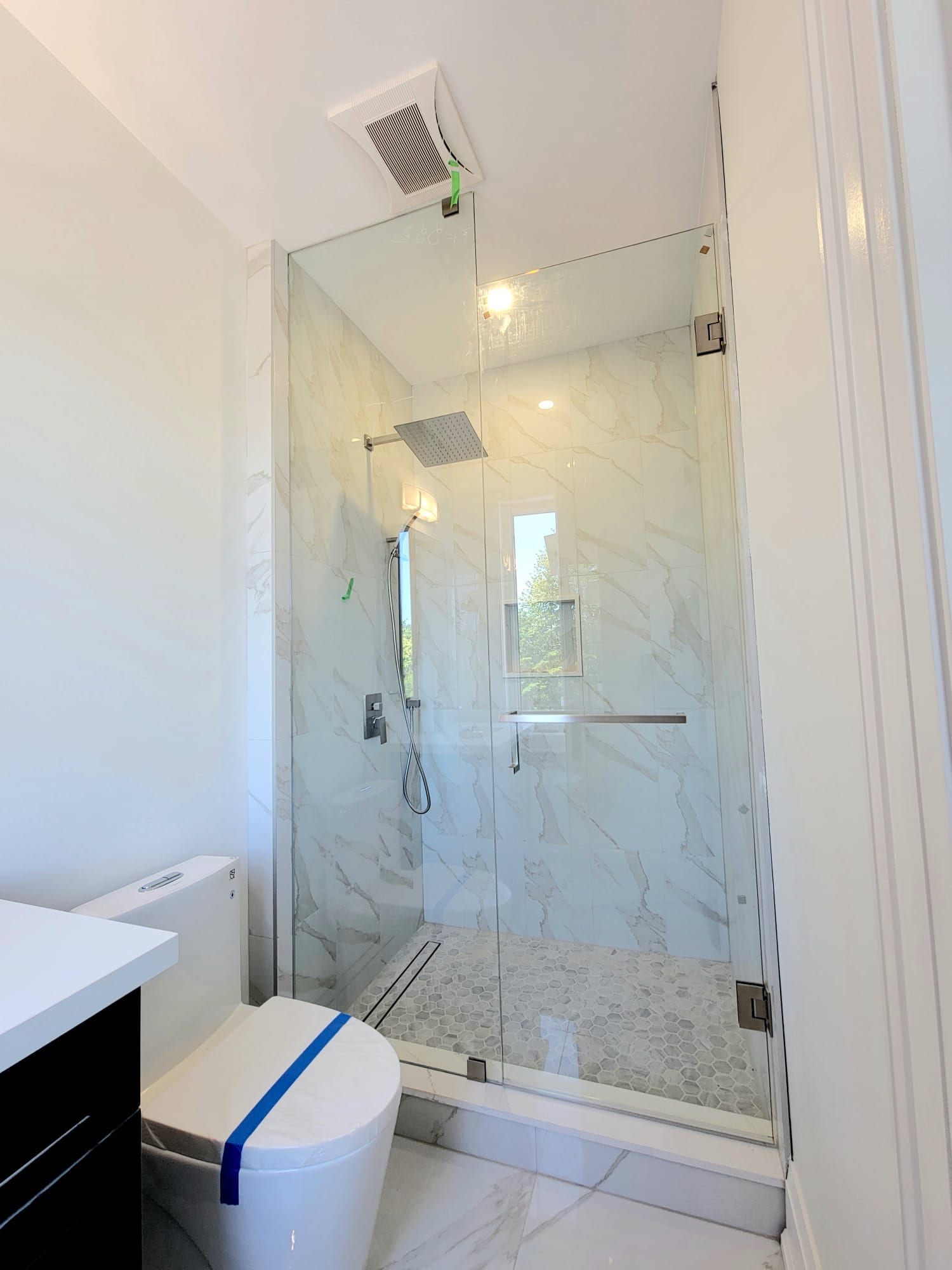
This is important enough to call out directly: not everything marketed as "frameless" is truly frameless. There are three common misrepresentations in the market:
- "Frameless" with a header bar at the top. If there's a visible horizontal aluminum rail at the top of the enclosure connecting the panels, it's semi-frameless at best. This is the single most common "frameless" misrepresentation — the rail is there because the glass panels aren't thick enough to be self-supporting at height.
- Thin glass in "frameless" hardware. Some enclosures use 6mm or 8mm glass held in clamp hardware, marketed as frameless. The glass is technically not framed, but it deflects noticeably when pushed, doesn't feel premium, and is often sold with hardware that isn't rated for the long-term load at those thicknesses.
- Full perimeter silicone "frame." An enclosure where every panel edge is bonded to the tile and to adjacent panels with a thick silicone bead effectively creates a sealed system — sometimes marketed as frameless because there's no aluminum, but with none of the maintenance advantages of a true frameless installation (you can't remove and replace silicone as easily as hardware).
What Makes a Real Frameless Installation
A true frameless shower installation has these characteristics:
- Glass is 10mm or 12mm tempered, cut to custom dimensions
- No visible aluminum frame on any glass panel face
- Hardware is solid brass, solid stainless steel, or investment-cast zinc alloy — never extruded aluminum
- Hinges, handles, and clamps are rated for the glass weight they carry
- Gaps between glass and tile are sealed with appropriate silicone (the installer selects the right colour to match grout)
- The installation is plumb, level, and square — which requires the walls to be plumb, level, and square first
- What thickness is the glass? (Answer should be 10mm minimum for a door)
- What is the hardware material? (Answer should be solid brass or 316 stainless for exterior, not extruded aluminum)
- Is there a header bar at the top? (For a true frameless — no)
- Are the panels custom-cut to my exact dimensions? (Always yes for quality installs)
- Can I see the CSA/ANSI certification stamp on the glass? (Always yes for compliant glass)
Which One Is Right for Your Home?
The honest decision framework: if your home is priced above $700,000, is in a competitive GTA market, and the master bath is a showing feature at resale — choose frameless. The maintenance advantages and the resale signal are both real and significant. If budget is truly constrained, semi-frameless in the master bath is a meaningful step up from framed. Save framed for guest baths and secondary spaces where the audience is your family, not buyers.
If you're planning to live in the home for 10+ years and don't have resale in mind, the calculation shifts toward your daily experience. In that case: frameless is still the better long-term maintenance choice, but the cost may or may not feel justified depending on how much you care about the daily experience of your shower versus other renovation priorities.
Frequently Asked Questions
For most homeowners undertaking a renovation that includes new tile, yes — but not because frameless looks better. The real value comes from longevity and maintenance: framed showers accumulate mildew and grime in the metal channel along the glass-to-tile transition, which requires aggressive cleaning every 1–2 months over the life of the installation. Frameless eliminates that channel entirely and only requires squeegee-and-vinegar-water maintenance. Over a 15-year ownership window, the cumulative time saved on cleaning often outweighs the upfront cost difference.
Slightly more often, yes — but for the opposite reason most people assume. Framed showers leak because the rubber and felt gaskets that seal the glass into the metal channels degrade over time and lose their seal. Frameless showers, when properly installed with magnetic door seals and architectural silicone at the perimeter, very rarely leak. The most common cause of frameless leak is installer error, which is covered by a quality installation warranty.
It depends entirely on the substrate condition under the old enclosure. The framed shower's metal channels are typically silicone'd directly to the tile surface — removing them often pulls tile or chips the substrate. For a clean frameless retrofit, the tile surface where new glass will sit needs to be intact, plumb, and waterproof. We assess this at the measure visit. In some cases a partial retile is needed; in others the old enclosure removes cleanly and frameless can install directly.
For full service specifications, pricing options, and to start your project, see our frameless glass shower installation page.
Get a frameless shower that actually delivers
Built By Glass installs true frameless shower enclosures across the GTA — custom glass, quality hardware, Founder-Led Standard. Every installation is backed by our 5-year warranty.
Prefer to talk it through? Call 647-778-0430.